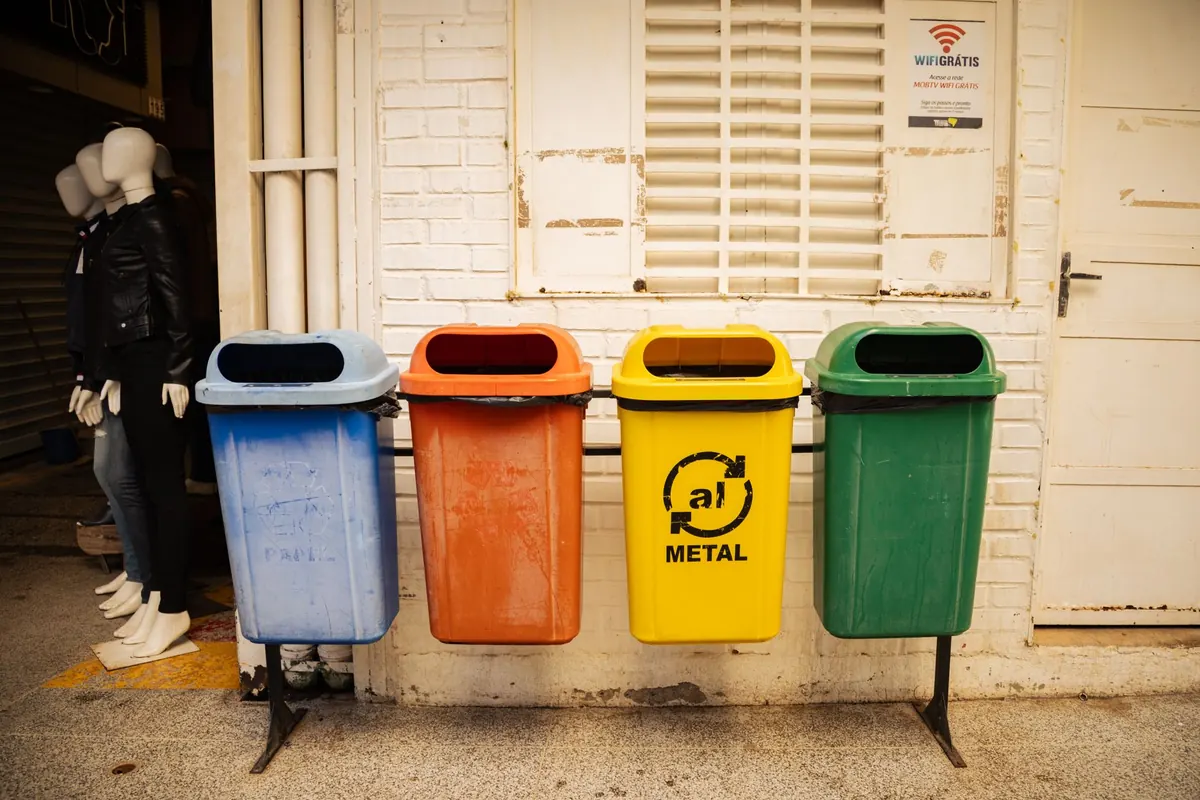
Apartment Recycling in Italy: A Room-by-Room Sorting Guide
A practical, room-by-room guide to sorting waste in an Italian apartment, reading your comune's collection...

By half past seven the piazza is already busy: the barista is stacking cornetti, two men are arguing about football on the shaded bench, a woman is queueing at the pharmacy before it gets warm. By eleven it will be almost empty, and not only out of habit. Italian towns run on a summer timetable shaped by heat — and the heat, increasingly, is announced in advance, in colours, on a bulletin that lists cities one by one.
You do not need to be a meteorologist to use it. You only need to know what the colours mean and which parts of your day they touch.
From late spring to mid-September, the Ministry of Health publishes daily heat bulletins for a set list of Italian cities, forecasting conditions over the following days and how those conditions are likely to affect health. Regional environment agencies and local health authorities issue their own versions, and local newspapers, TV weather slots and town noticeboards reproduce them. The result is one of those very Italian systems: technically rigorous, publicly funded, and mostly consumed as a coloured square next to the name of your city.
The scale runs from 0 to 3, with colours borrowed from the traffic light. Wording varies slightly between regions, but the logic is consistent.
One useful habit: read the bulletin for the next two days, not just today. Plans that are easy to cancel on Tuesday are painful to cancel on Thursday at noon.
Watch a town through a level 2 or 3 stretch and you can see the timetable fold in on itself. The market packs up earlier. The post office queue is longest at opening. The afternoon riposo, which in many smaller towns runs from roughly 13:00 to 16:00 anyway, becomes non-negotiable rather than optional.
Much of this is formalised. Shops and businesses post an orario estivo — summer hours — that may trim an hour here, close on a weekday afternoon there, or shut entirely for a fortnight in August. Professional offices often see clients only in the morning. Pharmacies rotate their opening times and display the nearest one on duty (farmacia di turno) in the window, which matters more than usual when you need something at 14:00.
Cultural sites adapt too. Museums and archaeological parks frequently shift to early openings or add late evening hours, and open-air performances, festivals and sagre migrate to after sunset almost as a matter of course. Summer camps for children (centri estivi) tend to run in the morning and finish before lunch. Sports clubs move training to dawn or after 20:00; the five-a-side pitch at 15:00 in July is a young man's mistake you make once.
At the top of the scale, heat becomes an administrative matter. Mayors and regional presidents in recent summers have issued ordinances restricting outdoor work — agriculture and construction are the usual targets — during the hottest hours of the early afternoon. The detail differs from place to place, so if you work outside in Italy in July, the first question is not what your employer prefers but what your region and comune have actually ordered this year.
Drought conditions bring a second layer of local rules: limits on garden watering, filling pools or washing cars, and in some southern towns a rotating water supply schedule that gives each street water for certain hours of the day. If you are staying somewhere rural, check the comune's website or the water utility's notice sheet, and keep a few filled containers. It is a normal inconvenience, not a crisis.
Two systems are easy to mix up. The health ministry's heat colours are one thing. The civil protection alert colours used for storms, wind and flooding are another, and the bollino rosso or nero you hear about on August weekends is about motorway traffic, not temperature. When someone says "red today", it is worth knowing which red they mean.
The advice Italian health authorities give is deliberately unglamorous, and it works. As a routine:
Air conditioning is not universal in Italian homes, so public cool spaces matter: supermarkets, pharmacies, libraries, churches, and in many towns designated air-conditioned rooms for older residents during red alerts. If your flat becomes unbearable, spending the hottest four hours elsewhere is a legitimate plan.
Italy's real heat infrastructure is social. The portiere, the barista, the woman at the hairdresser, the volunteer from the parish or from Croce Rossa who phones the over-eighties twice a day during an alert — these are the people who spot that someone has not come down for the newspaper.
You can join in without much effort. Swap numbers with the person across the landing, especially if they live alone. Knock at level 2 and level 3, morning and evening. Watch for confusion, headache, nausea, dizziness or skin that has stopped sweating, which are signs of heat illness rather than ordinary tiredness; get help rather than waiting it out. In Italy the emergency numbers are 112, the European emergency line, and 118 for medical emergencies. Anything beyond first aid belongs to a doctor or pharmacist, and it is worth asking one if you are unsure.
Before the next orange or red day arrives, do these five things and the rest is easy. Find out where your comune posts heat notices, and check it in the morning rather than at noon. Save the number of a neighbour, your local pharmacy and the pharmacy rota. Fill a couple of bottles and keep them in the fridge. Move your shopping, exercise and errands to before 10:00 or after 19:00 for the duration. And tell someone your routine — the neighbour who knows you go out at eight will notice if you don't. Heat is predictable enough in Italy that the sensible response is not drama but a slightly different timetable, kept for a few weeks a year.
Photo: Janvanbizar / Pixabay
A practical, room-by-room guide to sorting waste in an Italian apartment, reading your comune's collection...
Italy runs on two calendars: the national holidays that close banks and schools, and the local saint's day...
A practical first-timer’s guide to Italian neighborhood sagre: when to arrive, how the food lines and...